Cell transport is essential for maintaining cellular homeostasis and involves various mechanisms that allow substances to enter and exit cells. The study of cell transport has evolved significantly since the first observations of cells by Robert Hooke in 1665, leading to the discovery of key transport processes such as diffusion, osmosis, and active transport. Understanding these processes is vital for comprehending how cells interact with their environment.
History of Cell Transport Research
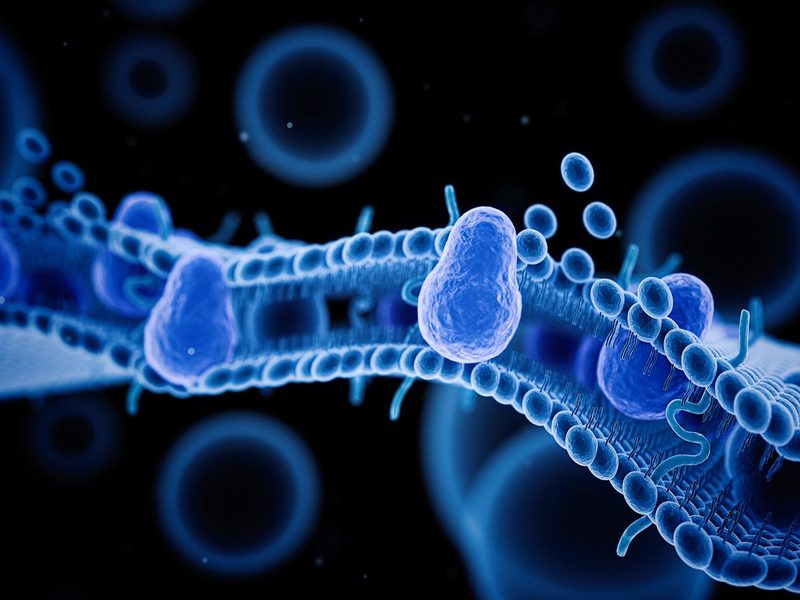
The history of cell transport research dates back to the 19th century when scientists like Thomas Graham explored the principles of diffusion. In 1854, Graham formulated Graham's Law, which describes how gas diffusion rates are influenced by molecular weight. The understanding of cell membranes was further advanced by the Fluid Mosaic Model, proposed by Singer and Nicolson in 1972, which elucidated the dynamic nature of cellular membranes and their role in transport processes.
Types of Cell Transport
Cell transport mechanisms can be broadly categorized into passive transport and active transport. Passive transport, which includes processes like simple diffusion and facilitated diffusion, does not require cellular energy (ATP) and relies on concentration gradients. In contrast, active transport requires energy to move substances against their concentration gradient, exemplified by the sodium-potassium pump that maintains essential ionic balances within cells.
The Importance of Osmosis
Osmosis is a crucial type of passive transport specifically concerning the movement of water across semipermeable membranes. It plays a vital role in regulating cell volume and maintaining osmotic balance. Without osmosis, cells could swell and burst or shrink and become non-functional, leading to significant physiological consequences. This process is essential in various biological systems, including plant turgor pressure and kidney function in animals.
Ready to challenge yourself? This quiz will cover key concepts of cell transport, from historical discoveries to the mechanisms that sustain life at the cellular level.
 Multiple Choice
No comments yet. Be the first!