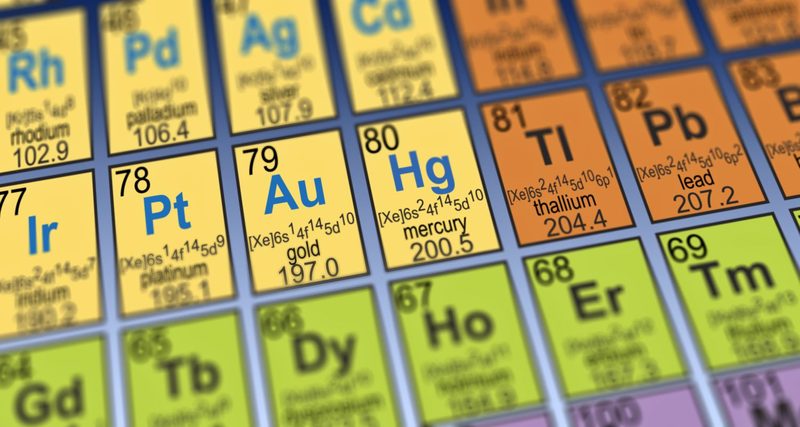
The study of elements is a cornerstone of modern chemistry, providing insights into the fundamental building blocks of matter. With the Periodic Table as a key reference, elements such as hydrogen, discovered by Henry Cavendish in 1766, and gold, revered since ancient times, have distinct properties that define their behavior and interactions. The quest to understand these elements has led to countless discoveries, including the synthesis of new elements in laboratories.
History of Element Discovery
The journey of discovering elements began with ancient civilizations, who identified metals like gold and copper. However, it wasn't until the late 18th century that scientists like Antoine Lavoisier began categorizing these substances into elements and compounds. In 1869, Dmitri Mendeleev created the first widely recognized Periodic Table, organizing elements by atomic weight and predicting the properties of undiscovered ones, which laid the groundwork for modern chemistry.
Classification of Elements
Elements are classified into three main categories: metals, nonmetals, and metalloids. Metals, like iron, are typically conductive and malleable, while nonmetals, such as oxygen, often exist as gases or brittle solids. Metalloids exhibit properties of both categories, like silicon, which is crucial in electronics. Understanding these classifications helps scientists predict how elements will react with one another.
Recent Discoveries in Element Research
In the 21st century, the discovery of superheavy elements, such as oganesson (Og), has pushed the boundaries of chemistry. Synthesized in 2002, oganesson is notable for its unique properties, challenging existing theories about element behavior. These discoveries not only expand the Periodic Table but also enhance our understanding of atomic structure and stability.
Ready to test your knowledge on elements? This quiz covers everything from historical discoveries to modern advancements in chemistry. See how well you can score!
 Multiple Choice
No comments yet. Be the first!