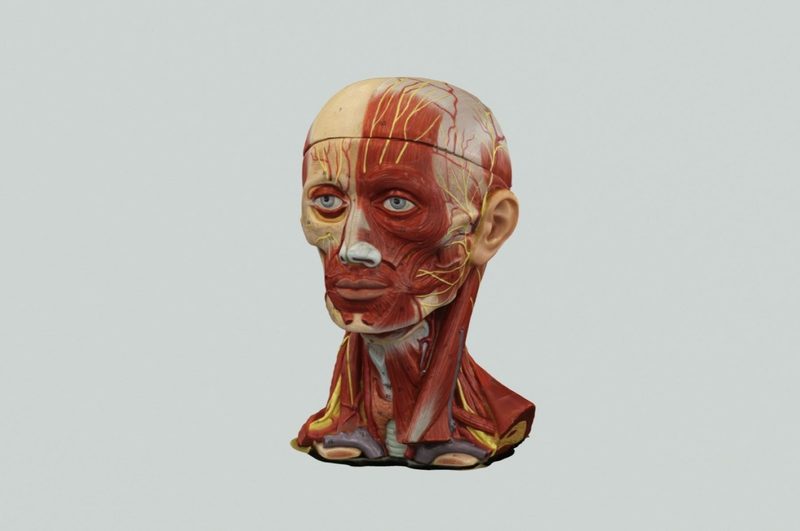
The human face is a complex structure composed of more than 40 distinct facial muscles, responsible for a wide range of expressions. These muscles are primarily innervated by the facial nerve (cranial nerve VII), which was first described in detail by the anatomist Andreas Vesalius in the 16th century. Facial muscles are unique in their ability to convey emotions such as happiness, sadness, anger, and surprise, playing a crucial role in non-verbal communication.
History of Facial Muscles
The study of facial muscles dates back to ancient civilizations, with notable contributions from figures such as Galen in the 2nd century AD, who provided early descriptions of muscle function. However, it was not until the Renaissance that anatomists like Andreas Vesalius and Leonardo da Vinci significantly advanced our understanding of facial anatomy. Through meticulous dissection and observation, they laid the groundwork for modern anatomy, allowing us to appreciate the intricate relationships between facial muscles and expression.
Functions of Facial Muscles
Facial muscles perform vital functions beyond mere expression; they are also involved in essential activities such as eating and speaking. For example, the orbicularis oris muscle plays a crucial role in controlling the movement of the lips, allowing for actions such as kissing and whistling. Similarly, the buccinator muscle helps in chewing by keeping food between the teeth. Understanding these functions highlights the importance of facial muscles in our daily lives.
Facial Muscles and Communication
Facial expressions are a universal language, transcending cultural boundaries. Research shows that specific facial movements can convey emotions more effectively than words. The zygomaticus major muscle, for example, is responsible for smiling, while the corrugator supercilii muscle is associated with frowning. These muscles allow humans to express a wide range of emotions, aiding in social interactions and bonding.
Ready to test your knowledge of facial muscles? This quiz covers everything from their anatomy to their functions and historical significance. Challenge yourself to see how much you really know about these fascinating structures!
 Multiple Choice
No comments yet. Be the first!