Mitosis is a vital process in the life cycle of eukaryotic cells, allowing for the division of one cell into two genetically identical daughter cells. The term 'mitosis' comes from the Greek word 'mitos,' meaning 'thread,' which aptly describes the appearance of chromosomes during this stage of the cell cycle. Key figures in the study of mitosis include the German scientist Walther Flemming, who first observed the process in the late 1800s, and August Weismann, who contributed to our understanding of cell division and heredity.
History of Mitosis
The discovery of mitosis has evolved significantly since Walther Flemming's initial observations. In 1879, Flemming described the process of cell division and coined the term 'chromatin' to refer to the material that makes up chromosomes. His meticulous work laid the foundation for future studies in genetics and cellular biology. In the following decades, scientists like Hermann Fol and Edouard Van Beneden expanded upon these ideas, providing further insights into the mechanisms underlying mitosis.
The Phases of Mitosis
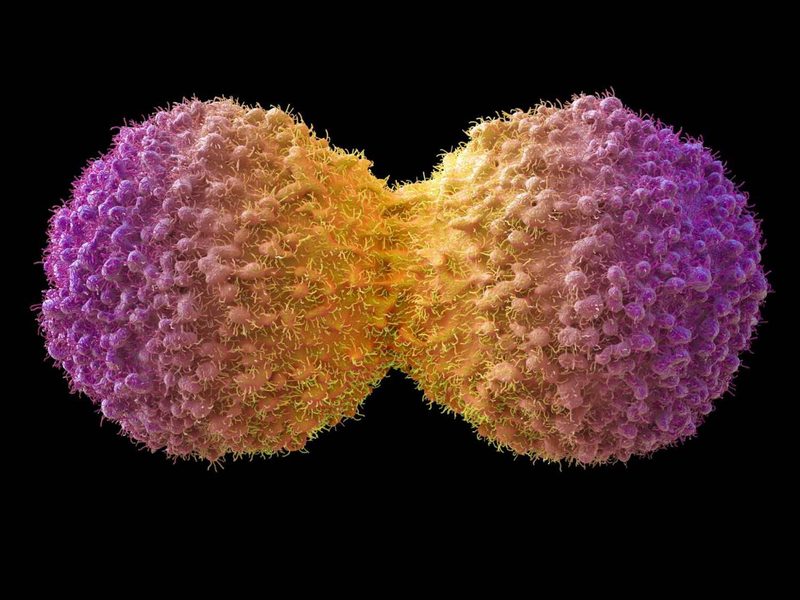
Mitosis is generally divided into five distinct phases: prophase, metaphase, anaphase, telophase, and cytokinesis. During prophase, the chromatin condenses into visible chromosomes, and the nuclear envelope begins to break down. In metaphase, chromosomes align at the cell's equatorial plane. Anaphase follows, where sister chromatids are pulled apart to opposite poles of the cell, and during telophase, the nuclear envelope reforms around each set of chromosomes. Finally, cytokinesis divides the cytoplasm, resulting in two separate cells.
Importance of Mitosis
Mitosis is crucial for various biological functions, including growth, tissue repair, and asexual reproduction in certain organisms. In humans, mitosis enables the body to replace dead or damaged cells, ensuring that tissues can function properly. Errors in mitosis can lead to serious consequences, such as cancer, where uncontrolled cell division occurs. Understanding this process is essential for advancements in medical research and treatments.
Challenge your knowledge of mitosis with our quiz that covers its history, phases, and biological significance. See how well you understand this essential cellular process!
 Multiple Choice
No comments yet. Be the first!