The veto power of the President of the United States is a significant tool established by the Constitution, allowing the president to reject legislation passed by Congress. This power, first exercised by George Washington in 1792, serves as a critical check against legislative overreach. The president can veto bills, but Congress can override a veto with a two-thirds majority in both houses, illustrating the delicate balance of power.
History of the Veto Power
The veto power was enshrined in the U.S. Constitution in 1787, during the Constitutional Convention. It was designed to prevent hasty legislation and ensure that the president could act as a guardian of the Constitution. Over time, presidents have used this power in various ways, from Thomas Jefferson’s veto of the Bank of the United States charter in 1811 to Franklin D. Roosevelt’s record 635 vetoes during his time in office, reflecting the evolving political landscape and the president's role within it.
The Mechanics of Veto Power
When the President receives a bill, they have ten days to either sign it into law or issue a veto. If a veto occurs, the bill is sent back to Congress with the president's objections. Congress can then attempt to override the veto with a two-thirds majority vote in both the House and Senate. This process underscores the system of checks and balances integral to U.S. governance, ensuring that no single branch becomes too powerful.
Influence on Legislation
The veto power has profound implications for legislative strategy. Presidents often use the threat of a veto to influence lawmakers, encouraging them to modify bills to align with the president's priorities. This dynamic was evident when Ronald Reagan leveraged his veto power to shape fiscal policy in the 1980s, demonstrating how the presidential veto can serve as both a defensive and offensive tool in governance.
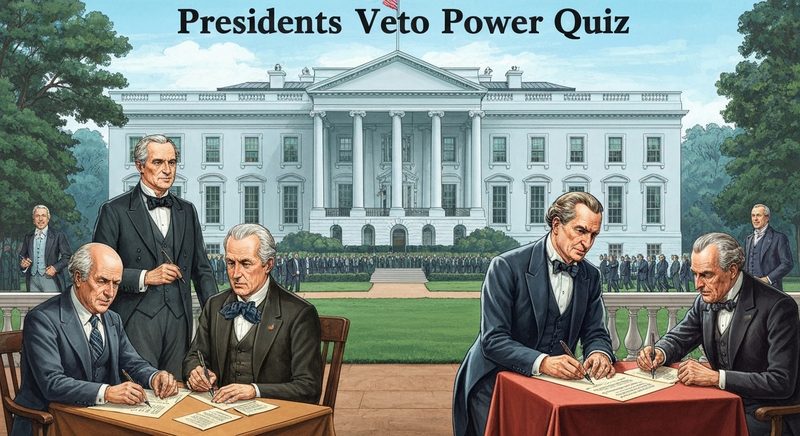
Now that you've learned about the presidential veto power, it's time to put your knowledge to the test! This quiz covers historical facts, notable figures, and key events related to the veto power. Can you score 10/10?
 Multiple Choice
No comments yet. Be the first!