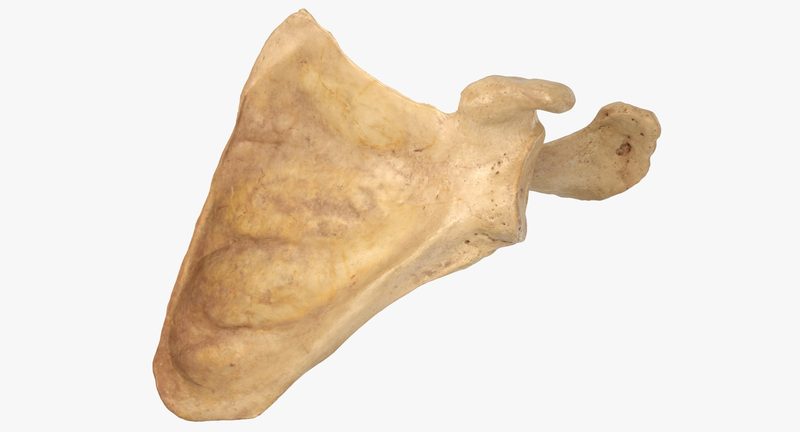
The scapula, or shoulder blade, is a flat, triangular bone located in the upper back. It serves as an attachment point for several muscles that are crucial for shoulder movement. Anatomically, the scapula plays a key role in the mechanics of the shoulder joint, allowing for a wide range of motion. Historically, its significance was recognized as early as the time of Hippocrates, who detailed its importance in his medical writings around 400 BCE.
History of the Scapula
The scapula has been a subject of study since ancient times. The Greek physician Galen in the second century AD provided one of the earliest comprehensive descriptions of the scapula, emphasizing its role in the human skeletal system. In the Renaissance, anatomists like Andreas Vesalius corrected many of Galen's misconceptions, leading to a more accurate understanding of the scapula's anatomy. This period marked a significant advance in our knowledge of human anatomy and the role of the scapula.
Function and Anatomy
The scapula is crucial for shoulder function and stability. It consists of various parts, including the glenoid cavity, which articulates with the humerus to form the shoulder joint. Its unique shape allows for the attachment of muscles such as the rotator cuff, which is essential for lifting and rotating the arm. Injuries to the scapula or surrounding muscles can severely limit mobility and strength, highlighting its importance in both daily activities and athletic performance.
Scapular Pathologies
Various conditions can affect the scapula, including scapular winging, which occurs when the scapula protrudes from the back due to muscle weakness or nerve damage. Other common issues include fractures, which can occur from trauma or falls. Understanding these conditions is vital for healthcare providers in diagnosing and treating shoulder-related injuries.
Now that you know more about the scapula, its anatomy, and its historical significance, it's time to test yourself! This quiz will cover various aspects of the scapula, from its function to notable historical figures associated with its study.
 Multiple Choice
No comments yet. Be the first!