Skeletal muscle is a type of striated muscle tissue that is under voluntary control, enabling movement of the skeleton. Comprising around 640 individual muscles, it plays a vital role in locomotion, posture, and overall body strength. The history of skeletal muscle research dates back to ancient times, but significant advancements were made in the 18th century when scientists like Giovanni Albrecht von Haller began to investigate muscle physiology.
History of Skeletal Muscle Research
The study of skeletal muscles has evolved significantly over centuries. In the early 1700s, Haller published influential works that connected the structure of muscles to their function. His detailed observations helped to establish muscle histology as a scientific discipline. In the 19th century, the work of Claude Bernard further advanced our understanding by exploring how muscles utilize energy, leading to the discovery of muscle fibers and their role in contraction.
Muscle Composition and Function
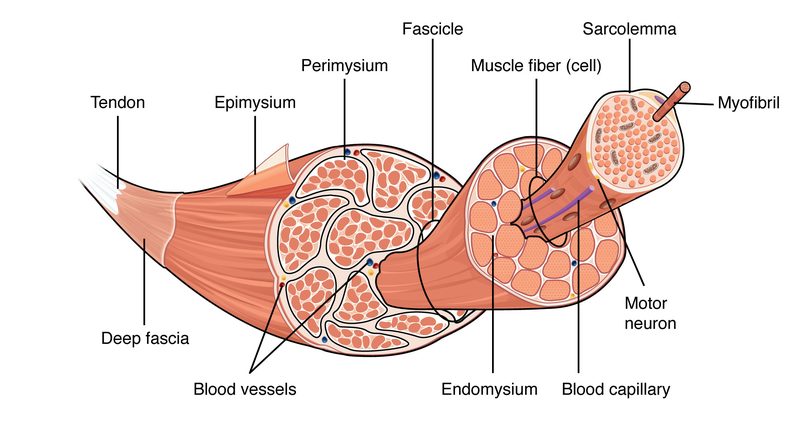
Skeletal muscles are primarily composed of long, multinucleated fibers known as muscle fibers or myofibers. These fibers contain various types of proteins, notably actin and myosin, which interact to facilitate muscle contraction. The arrangement of these proteins gives skeletal muscle its striated appearance. The contraction mechanism, known as the sliding filament theory, describes how these filaments slide past each other during muscle contraction, enabling movement.
Health and Fitness Implications
Maintaining skeletal muscle health is crucial for overall fitness and well-being. Regular physical activity stimulates muscle growth and can prevent age-related muscle loss, known as sarcopenia. Resistance training, in particular, has been shown to enhance muscle strength and endurance, contributing to better metabolic health. Understanding the role of skeletal muscle in exercise and metabolism is essential for developing effective fitness programs.
This quiz will test your knowledge on various aspects of skeletal muscle, including its structure, function, and historical significance. Are you ready to challenge yourself?
 Multiple Choice
No comments yet. Be the first!