Synonyms and antonyms are crucial elements of language that enrich our communication by providing alternative words with similar or opposite meanings. The concept of synonyms dates back to ancient scholars who recognized the importance of word variety. For instance, in 350 BC, Aristotle examined language's structure, laying the groundwork for future linguistic studies. This quiz delves into the intricacies and historical significance of these terms.
History of Synonyms and Antonyms
The study of synonyms and antonyms has evolved significantly over the centuries. Early linguists, such as Noah Webster in the early 19th century, contributed to the understanding of language by compiling dictionaries that included lists of synonyms. This made it easier for writers and speakers to find alternatives and improve their expression. The evolution of language has also led to the creation of thesauri, with Peter Mark Roget publishing the first widely recognized thesaurus in 1852, further emphasizing the importance of synonyms and antonyms in effective communication.
Importance of Synonyms and Antonyms
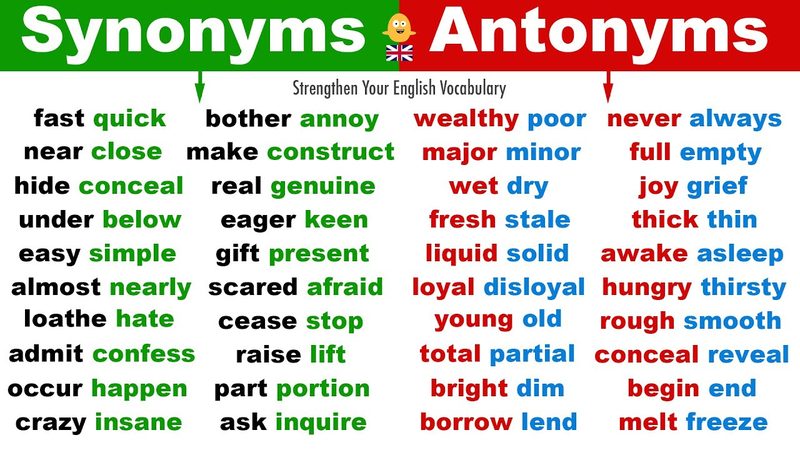
Synonyms play a vital role in enhancing vocabulary and allowing for more nuanced expression. For example, using the word 'happy' instead of 'joyful' can change the tone of a sentence. Conversely, antonyms help clarify meanings by providing contrast. Words like 'hot' and 'cold' create a clearer understanding of temperature variations. Understanding these concepts is essential for writers, educators, and anyone looking to master the art of language.
Applications in Modern Language
In today's digital age, the use of synonyms and antonyms extends beyond traditional writing. With the rise of search engine optimization (SEO), understanding how to use these linguistic tools effectively can enhance online content visibility. Writers are encouraged to incorporate synonyms strategically to avoid redundancy and maintain reader interest. This dynamic aspect of language continues to evolve as new words and phrases emerge.
Challenge yourself with this quiz that covers the fundamentals of synonyms and antonyms, testing your knowledge on their definitions, historical significance, and practical applications. Can you score 10/10?
 Multiple Choice
No comments yet. Be the first!