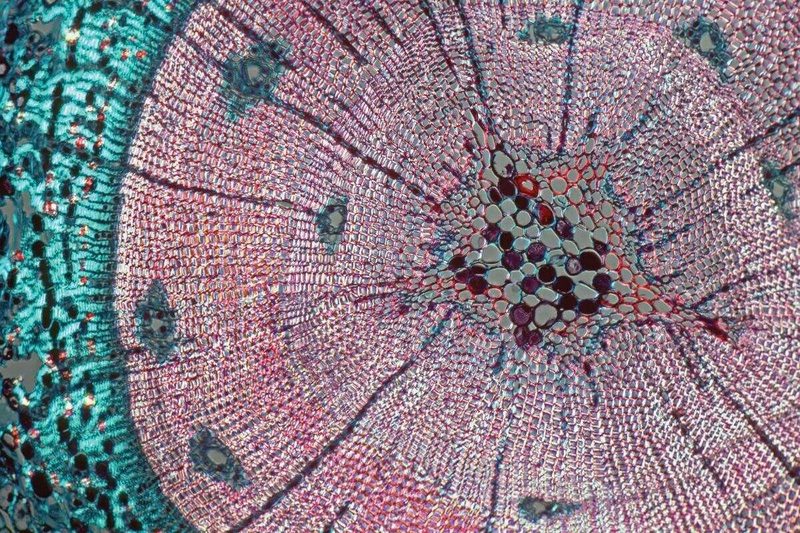
Tissues are vital components in the biological architecture of living organisms, comprising groups of cells that work together to perform specific functions. In humans, there are four main types of tissue: epithelial, connective, muscle, and nervous tissue, each playing a crucial role in maintaining homeostasis. The study of tissues, known as histology, was significantly advanced by scientists like Rudolf Virchow in the 19th century, who proposed the cell theory, stating that all tissues are composed of cells. This foundational concept continues to influence biological sciences today.
History of Tissue Study
The exploration of tissues dates back to the early days of microscopy in the 1600s. Pioneers like Robert Hooke first observed cork tissue, coining the term 'cell.' In the mid-19th century, Virchow advanced tissue study by integrating cellular analysis into understanding disease. His famous assertion, "Omnis cellula e cellula," meaning "all cells arise from cells," reshaped how we comprehend tissue structure and function, establishing the groundwork for modern histopathology.
Types of Tissue
In animal biology, the four primary types of tissues each have distinct structures and functions. Epithelial tissue serves as a protective barrier and is involved in secretion and absorption. Connective tissue supports and binds other tissues, with various forms including bone, blood, and adipose tissue. Muscle tissue is responsible for movement, categorized into skeletal, cardiac, and smooth muscle, while nervous tissue facilitates communication within the body through neurons and glial cells. Understanding these types is crucial for fields like medicine and biology.
Applications in Medicine
The study of tissues has led to significant advancements in medical science, including cancer research and regenerative medicine. Histopathology, the microscopic examination of tissues, allows for precise diagnosis of diseases like cancer, guiding treatment decisions. Furthermore, the discovery and application of stem cells have opened new avenues for tissue regeneration, offering potential therapies for conditions such as spinal cord injuries and degenerative diseases.
Ready to put your knowledge of tissues to the test? This quiz will cover the essential aspects of tissue types, their history, and their significance in modern science. Can you score 10/10?
 Multiple Choice
No comments yet. Be the first!