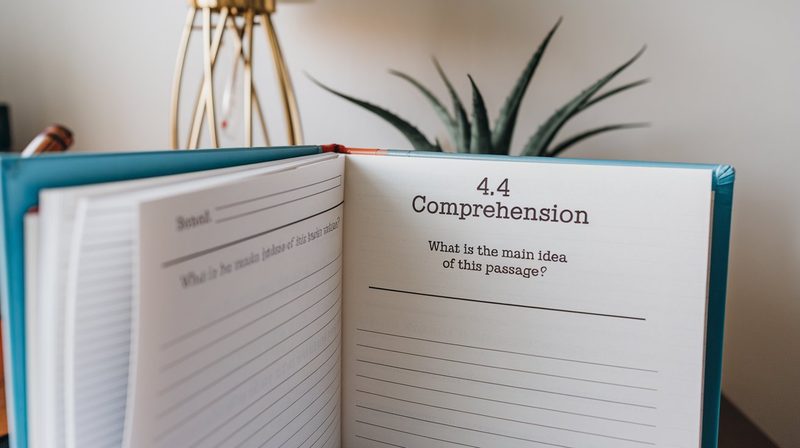
The concept of 4 4 Comprehension refers to a systematic approach to understanding literature that focuses on four key elements: context, content, structure, and interpretation. Originating in educational frameworks, this method helps readers dissect texts by examining their historical and cultural background, analyzing the narrative structure, and interpreting the underlying themes. This analytical skill is crucial for students and literary enthusiasts alike, enabling them to engage with texts on a deeper level.
History of Literary Comprehension
The evolution of literary comprehension techniques can be traced back to the ancient Greeks, particularly with figures like Aristotle, who emphasized the importance of rhetoric in understanding texts. By the 20th century, literary theory expanded significantly, introducing various schools of thought, such as formalism and structuralism, which influenced how readers approached texts. The rise of educational methodologies in the 21st century has further highlighted the importance of comprehension strategies, making '4 4 Comprehension' a vital skill in today’s academic landscape.
Key Figures in Literary Theory
Numerous scholars have contributed to the field of literary comprehension, but a few stand out. Roland Barthes, a French literary theorist, challenged traditional interpretations by asserting that the author’s intentions should not dictate meaning. Meanwhile, Virginia Woolf explored the inner workings of her characters' minds, demonstrating the need for a deeper understanding of narrative perspective. Both figures exemplify the complex interplay between reader and text, essential for mastering '4 4 Comprehension.'
Modern Applications of Comprehension Strategies
Today, the principles of '4 4 Comprehension' are widely applied in educational settings to enhance critical thinking skills. Programs utilize various strategies, including guided discussions and analytical writing assignments, to help students grasp complex literary concepts. Furthermore, these skills are invaluable beyond the classroom, aiding in the analysis of media and communication in a rapidly changing world.
In this quiz, you'll dive into the essentials of '4 4 Comprehension' and test your knowledge on its history, key figures, and modern applications. Challenge yourself to see how well you understand these concepts!
 Multiple Choice
No comments yet. Be the first!