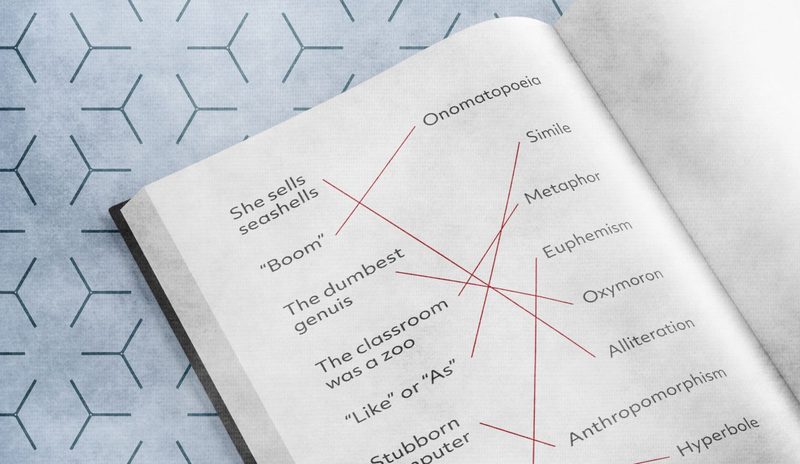
Literary Devices Quiz
Test your knowledge of literary devices! Metaphor, simile, irony, foreshadowing - The tools great writers use.
Test your knowledge of literary devices! Metaphor, simile, irony, foreshadowing - The tools great writers use.
Literary devices are techniques and structures that writers use to convey meaning, create effects, and enhance storytelling. Understanding literary devices is essential for analyzing literature in academic settings and for becoming a more effective writer. These techniques have been studied and named since ancient Greek rhetoricians systematized the art of persuasion and storytelling. Many literary devices - From metaphor to irony - Appear not just in formal literature but in everyday speech and communication.
The major categories of literary devices include figurative language (metaphor, simile, personification, hyperbole, synecdoche), sound devices (alliteration, assonance, onomatopoeia), narrative techniques (foreshadowing, flashback, stream of consciousness, unreliable narrator), structural devices (anaphora, parallelism, chiasmus), and rhetorical devices (irony, paradox, oxymoron, allegory). Metaphor and simile both compare unlike things, but metaphor states the comparison directly ('Life is a journey') while simile uses 'like' or 'as' ('Life is like a journey'). Irony occurs when what is said or happens differs from what is expected or meant.
Test more language skills with our Rhetorical Devices Quiz or our Literary Terms Quiz.
 Multiple Choice
No comments yet. Be the first!