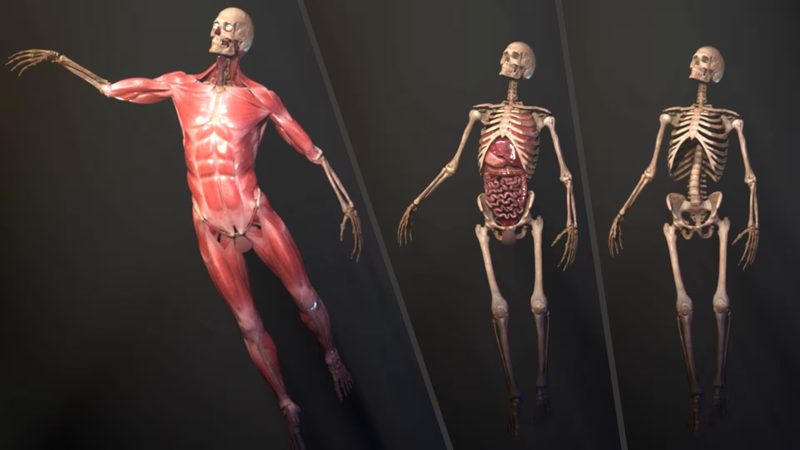
Anatomical Position Quiz
Anatomical position is essential in understanding human body orientation. Test your knowledge of this foundational concept and its terminology today!
Anatomical position is essential in understanding human body orientation. Test your knowledge of this foundational concept and its terminology today!
The anatomical position is a standardized way of describing the human body's orientation that serves as a reference point for anatomical studies. In this position, the individual stands upright, facing forward, with arms at the sides and palms facing forward. Understanding this foundational concept is crucial for students and professionals in fields like medicine, biology, and physical therapy. Are you ready to test your knowledge of this vital aspect of human anatomy?
The anatomical position provides a clear and consistent framework for describing locations and movements within the body. Using terms like superior (above), inferior (below), medial (toward the midline), and lateral (away from the midline) becomes easier when everyone refers to the same standard. This positional reference is essential for effective communication among healthcare professionals. For instance, when discussing injuries or surgical procedures, being able to accurately describe the location of a condition relative to the anatomical position is crucial.
Comprehending the anatomical position is not just an academic exercise; it has practical implications in diagnosing and treating patients. Knowledge of this position aids in understanding body movements, coordinates, and regions, which are essential in anatomy and physiology studies. Furthermore, it enhances the ability to interpret medical imaging, such as X-rays and MRIs, where positioning is key to accurate assessments. So, do you think you have what it takes to master this concept? Take the quiz to test your knowledge of anatomical position!
 Multiple Choice
No comments yet. Be the first!