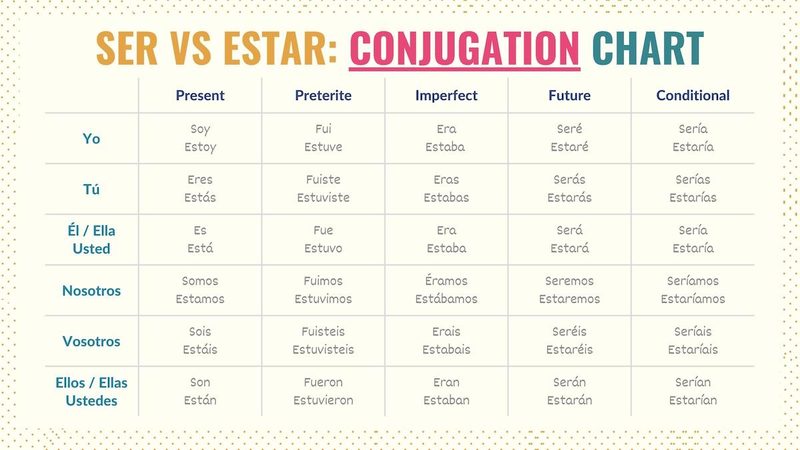
The difference between ser and estar is one of the most challenging aspects of learning Spanish. These two verbs both mean 'to be,' yet serve distinct functions in communication. Ser, introduced in early Spanish education, is used for inherent qualities, while estar describes states and conditions. Understanding these nuances can significantly impact fluency and comprehension.
History of 'Ser' and 'Estar'
The use of ser and estar has evolved over centuries. Historically, the distinction can be traced back to the Latin language, where two separate verbs existed for being. Over time, Spanish speakers have maintained this differentiation, which is evident in classic literature from the Golden Age of Spain, showcasing how context influences verb choice.
Key Differences Between 'Ser' and 'Estar'
Understanding ser and estar requires grasping their applications. Ser is used for descriptions, professions, origins, and time, while estar pertains to locations, emotions, and ongoing actions. For example, saying 'Ella es doctora' (She is a doctor) uses ser to denote a permanent role, whereas 'Ella está feliz' (She is happy) indicates a temporary feeling.
Common Mistakes
Many learners struggle with the correct usage of ser and estar, leading to frequent errors. A typical mistake is saying 'está inteligente' instead of 'es inteligente', as intelligence is a characteristic rather than a temporary condition. Such errors can alter the intended meaning and clarity of communication.
Ready to test your understanding of 'ser' and 'estar'? This quiz will challenge your knowledge of these essential Spanish verbs, ensuring you can identify their correct usage in various contexts.
 Multiple Choice
No comments yet. Be the first!