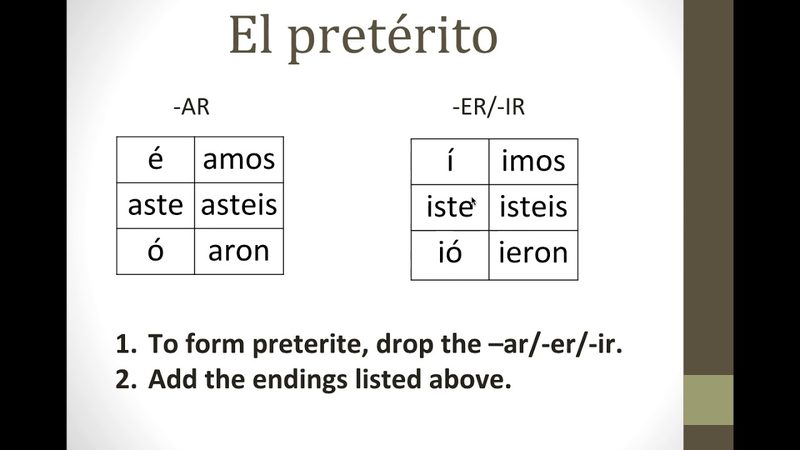
The Spanish preterite tense is essential for expressing actions that have been completed at a specific time in the past. First introduced in the 15th century, this tense has evolved through various linguistic studies and influences from notable scholars. Understanding the preterite is vital for anyone looking to master the Spanish language, as it conveys not only the timing of actions but also nuances in meaning.
History of the Preterite Tense
The preterite tense has its roots in Latin, particularly in how Romance languages evolved. Over centuries, it has been shaped by various dialects and regional uses across Spanish-speaking countries. Scholars have noted that the preterite was standardized in the late 19th century, gaining prominence in literary texts and formal communication. Today, it is a cornerstone of Spanish verb conjugation, crucial for effective storytelling.
Usage of the Preterite
The preterite tense is primarily used to indicate actions that were completed at a defined moment in the past. For example, in the sentence "Ayer comí pizza" (Yesterday I ate pizza), the preterite form of the verb "comer" (to eat) is used to convey that the action is finished. Understanding when to use the preterite versus other past tenses, like the imperfect, can be challenging but is essential for fluency in Spanish.
Common Verbs and Conjugation Patterns
Some of the most common verbs in the Spanish preterite include ir (to go), ser (to be), and hacer (to do/make), each of which follows unique conjugation patterns. For example, the verb "ir" is conjugated as "fui, fuiste, fue, fuimos, fuisteis, fueron". Familiarity with these patterns enables learners to accurately convey completed actions and enhances overall communication skills.
Now that you know more about the Spanish preterite tense, it's time to test your knowledge! This quiz will cover the history, usage, and common verbs associated with the preterite tense.
 Multiple Choice
No comments yet. Be the first!