The novel, as a distinct literary form, truly blossomed in the 18th century, evolving from earlier epic poems and picaresque narratives. Its rise coincided with increasing literacy and printing advancements, allowing stories to reach wider audiences. Early masterpieces like Daniel Defoe's 'Robinson Crusoe' from 1719 and Samuel Richardson's 'Pamela' (1740) paved the way. These longer prose narratives offered deeper exploration of character and society, quickly becoming a dominant form of storytelling that continues to captivate readers globally.
Victorian Voices and Romantic Realism
The 19th century witnessed a golden age for the novel in England. Jane Austen masterfully satirized the gentry in 'Pride and Prejudice' (1813). Charles Dickens, with vivid portrayals of Victorian London in 'Great Expectations' (1861), brought social commentary to the forefront. The Brontë sisters, Emily and Charlotte, explored passionate individualism in 'Wuthering Heights' (1847) and 'Jane Eyre' (1847). These literary giants not only entertained but also critiqued societal norms, establishing many conventions still found in fiction today.
Defining American Narratives
American literature forged its own powerful identity, giving voice to unique national experiences. Herman Melville's epic 'Moby Dick' (1851) delved into themes of obsession. F. Scott Fitzgerald's 'The Great Gatsby' (1925) remains a poignant exploration of the American Dream's disillusionment. Harper Lee's 'To Kill a Mockingbird' (1960), a Pulitzer Prize winner, bravely tackled racial injustice in the American South, becoming a beloved classic. These authors shaped a distinctly American literary tradition, grappling with identity and the complexities of their nation.
Global Visions and Enduring Legacies
The 20th century saw the novel transcend national borders, addressing universal human concerns and experimenting with new forms. George Orwell's chilling dystopian vision in '1984' (1949) became a prophetic warning against totalitarianism. J.R.R. Tolkien's 'The Lord of the Rings' (1954-1955) redefined fantasy literature, building intricate worlds. Gabriel García Márquez's 'One Hundred Years of Solitude' (1967) introduced magic realism to a global audience. These novels demonstrate the genre's incredible capacity to reflect, challenge, and shape our understanding of the world.
Want more Literature trivia? Try our To Kill A Mockingbird Quiz, challenge yourself to Sort Books Into Literary Genres, test your knowledge with the Alice In Wonderland Character Quiz, or delve into the world of a literary legend with our Hemingway Quiz.
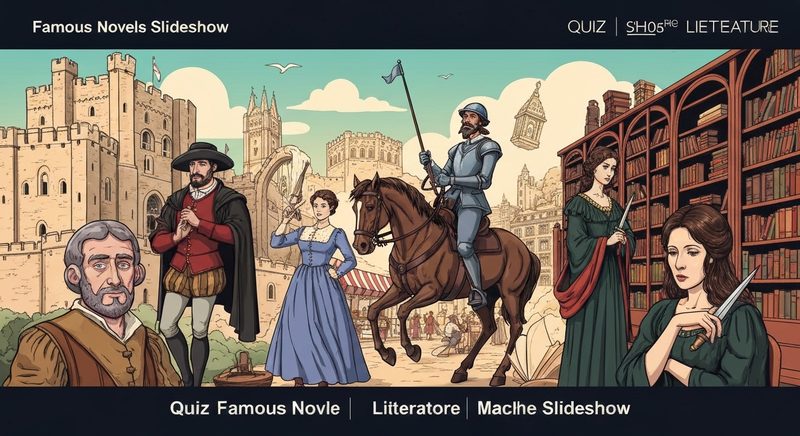
 Slideshow
No comments yet. Be the first!