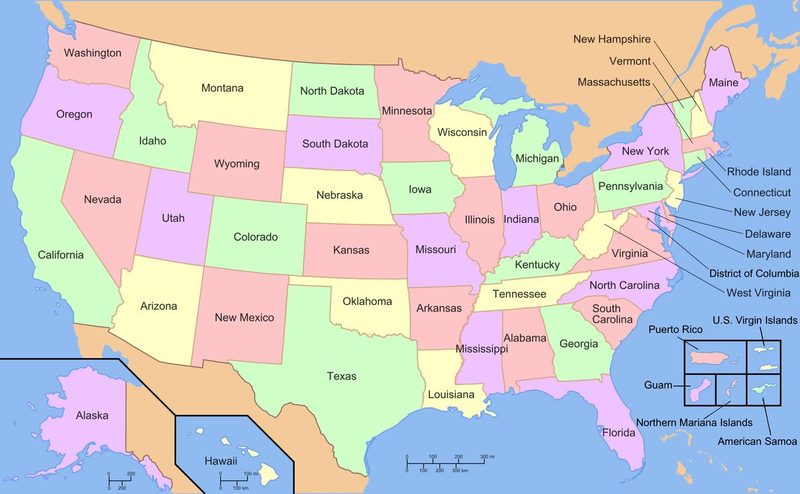
The U.S. map is more than just a representation of geographic boundaries; it tells the story of a nation shaped by diverse cultures, pivotal events, and natural wonders. From the Louisiana Purchase in 1803, which doubled the size of the nation overnight, to the admission of Alaska and Hawaii in the 20th century, the map is a historical document that reflects the evolution of the United States. Throughout the years, significant figures like Thomas Jefferson and Franklin D. Roosevelt played crucial roles in shaping the land we see today.
History of Statehood
The journey toward statehood for the United States began with the original 13 colonies. Over the years, various territories were acquired through treaties, purchases, and wars. Ohio became the first state carved out of the Northwest Territory in 1803, paving the way for others to follow. By the time the nation reached its current total of 50 states, many were added through significant events, including the Annexation of Texas in 1845 and the purchase of Alaska from Russia in 1867.
Geographical Wonders
The U.S. is home to diverse geographical features that are essential to its identity. The Rocky Mountains stretch over 3,000 miles, serving as a natural barrier and a resource-rich region. The Mississippi River, one of the longest rivers in the world, has been a vital waterway for trade and exploration since the early days of the nation. Additionally, landmarks like the Grand Canyon and the Everglades showcase the natural beauty that defines much of the American landscape.
Famous Cities and Their Significance
Each state boasts cities that are not only cultural hubs but also pivotal in American history. New York City, known as the Big Apple, has been the site of numerous historical events, including the signing of the United Nations Charter in 1945. Washington, D.C., the nation’s capital, is home to significant government buildings and memorials that honor influential figures in American history, such as Abraham Lincoln and Martin Luther King Jr.. Understanding these cities' roles enhances our appreciation of the U.S. map.
Are you ready to put your knowledge to the test? This quiz will challenge your understanding of U.S. geography, state history, and the unique characteristics of each state. Can you score 10/10?
 Multiple Choice
No comments yet. Be the first!